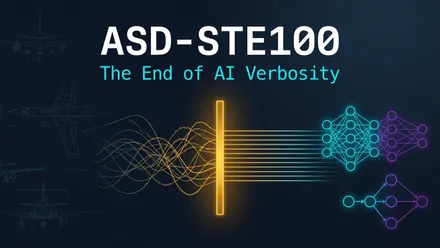
Why a 1970s Aviation Language is the Hottest Trend in AI?
Discover how a controlled language specification from the 1970s aerospace industry is solving modern LLM hallucinations, verbosity, and agent-to-agent communication failures.
Topic Archive
Showing 9 articles tagged with #artificial-intelligence
Discover how a controlled language specification from the 1970s aerospace industry is solving modern LLM hallucinations, verbosity, and agent-to-agent communication failures.
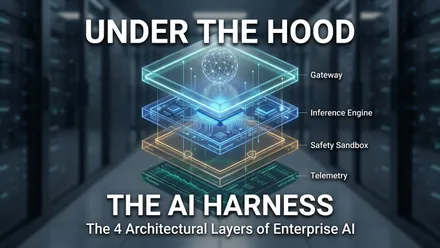
Discover the four critical architectural layers of an enterprise AI harness. Learn how integration gateways, state management, execution sandboxes, and audit spines turn raw AI models into secure, reliable digital workers.

Context is working memory; Memory is what persists. Discover the architectural tiers of AI memory, from simple Markdown routing to Agentic RAG and learn how to stop re-teaching your AI every session.

AI is like a microwave. It's an incredible piece of technology, but we still don't cook every meal in it. An architect's perspective on why we need to stop force-fitting AI into broken systems.
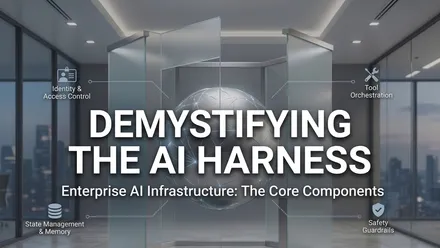
In Enterprise AI, a harness is the software infrastructure wrapped around a language model that turns it from a raw text generator into a functional, reliable AI agent. A popular industry shorthand defines this relationship simply: Agent = Model + Harness.
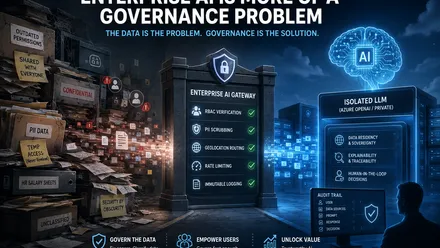
Enterprise AI isn't an LLM problem. It's a data governance crisis. Learn how architects solve RBAC, PII, and data residency to deploy secure AI at scale.
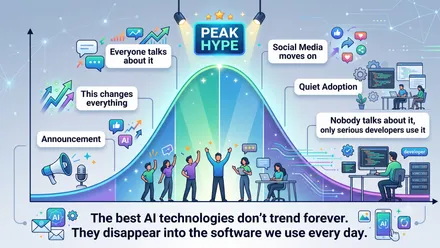
Five years from now, users won't care whether a feature uses an AI agent, MCP and RAG. They'll simply expect the software to work.

Most developers default to the strongest AI model for every task. Here’s why treating AI models like a specialised engineering team leads to faster iterations, lower token costs, and better software development.
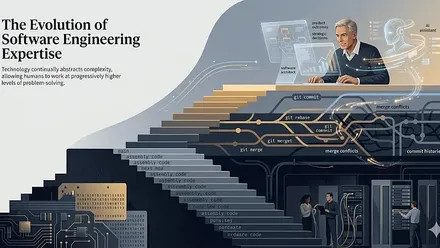
A recent incident made me rethink one of software engineering’s most fundamental skills.